The calls start, sometimes several a day, and it is hard to think straight enough to remember what you’re actually allowed to demand from the person on the other end of the line. Here is the plain answer: a federal law called the Fair Debt Collection Practices Act, the FDCPA, sets firm limits on what a debt collector can do, and it hands you real, enforceable rights the moment that first call comes in. This is what those rights actually are, in plain language, not legal jargon.
What the FDCPA Actually Covers
The Fair Debt Collection Practices Act is the main federal law protecting consumers from abusive, deceptive, or unfair debt collection tactics. It applies to personal, family, and household debts, credit cards, medical bills, student loans, car loans, mortgages, the kind of everyday consumer debt most people actually carry. Business debts are not covered.
One detail trips people up constantly: the FDCPA generally applies to third-party debt collectors and debt buyers, companies hired or that purchased the right to collect on someone else’s behalf, not to your original lender collecting its own debt directly. That said, a growing number of states have passed their own debt collection laws that extend similar protections to original creditors too, so even if the FDCPA itself doesn’t technically apply to your specific caller, you may still have real protections under state law.
What a Debt Collector Is Not Allowed to Do
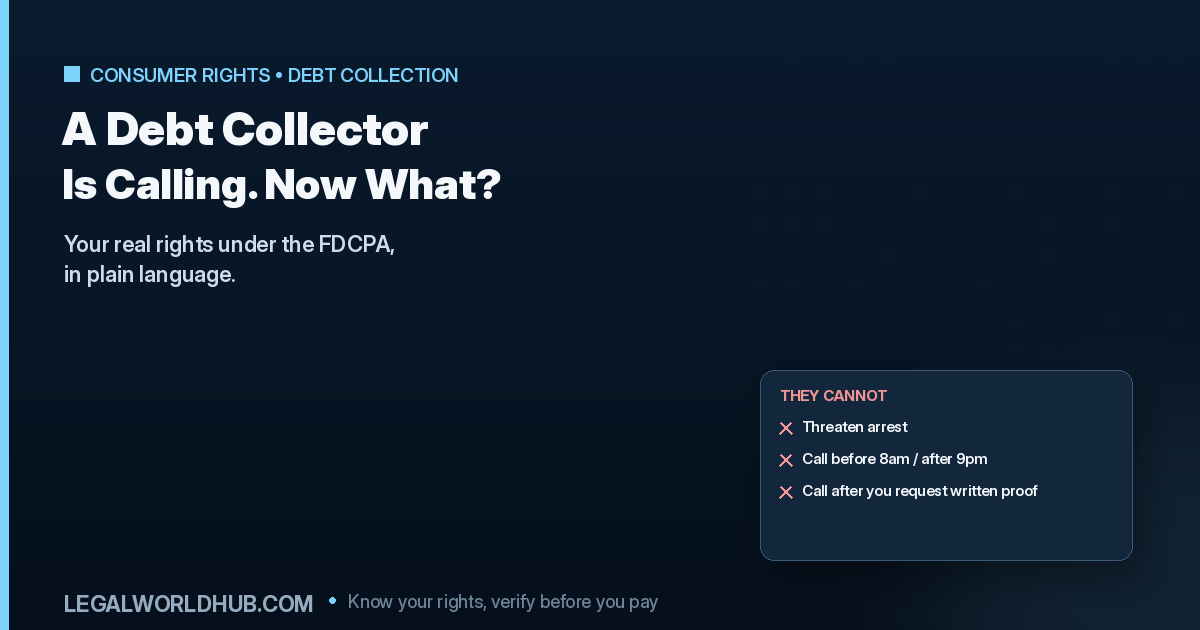
- Call before 8 a.m. or after 9 p.m. your local time, unless you’ve specifically agreed to different hours
- Call you at work if they know, or have reason to know, your employer doesn’t allow it
- Contact you at all, directly, once they know you’re represented by an attorney regarding that debt
- Call repeatedly or continuously with the intent to annoy, abuse, or harass you. The FTC has noted that six or more calls in a single day is a strong sign this line has been crossed, though the exact threshold depends on the specific facts
- Threaten arrest, jail time, or a lawsuit they don’t actually intend to file. Real debt collectors cannot threaten arrest under the FDCPA, period
- Use obscene, profane, or abusive language
- Misrepresent the amount you owe, falsely claim to be a lawyer or government official, or lie about the consequences of not paying
- Discuss your debt with your family, friends, employer, or neighbors, beyond simply trying to locate your contact information
Your Right to Demand Written Proof: The Debt Validation Letter
This is the single most useful tool you have, and most people never use it. Within five days of first contacting you, a debt collector is required to send written notice containing the amount owed, the name of the original creditor, and a statement of your right to dispute the debt. You then have 30 days from that first contact to send a written request demanding the collector validate the debt, meaning they must prove they actually have the right to collect it and that the amount is accurate. If you send this request within the 30-day window, the collector is legally required to stop collection efforts until they provide that proof.
Send this request in writing, not over the phone, and keep a copy along with proof of mailing. A phone conversation is your word against theirs later; a written, documented request is not. This single step resolves an enormous number of debt collection disputes, either because the collector produces valid documentation and the matter proceeds normally, or because they cannot, and collection has to stop.
How to Actually Stop the Calls
You have a specific, legal right to tell a debt collector to stop contacting you entirely, and once you exercise it correctly, they generally have to comply except for very limited purposes, such as confirming there will be no further contact or notifying you of specific legal action being taken.
1. Put your request in writing. A verbal request during a phone call is harder to prove and enforce later.
2. State clearly that you are requesting the collector cease all communication with you regarding this debt, citing the Fair Debt Collection Practices Act.
3. Send it by a method that creates a paper trail, certified mail with return receipt is the gold standard, so you have proof of when it was sent and received.
4. Keep a copy for your own records indefinitely.
Understand what this does and doesn’t accomplish. Stopping contact does not make the underlying debt disappear, and it does not prevent the collector from taking legal action against you if they believe you owe the money; it only stops them from continuing to contact you about it directly.
What If You Believe They’ve Crossed a Line?
The FDCPA has real teeth. If a debt collector genuinely violates the law, you generally have one year from the date of the violation to sue them, and you can recover up to $1,000 in statutory damages, plus any actual damages you suffered, plus attorney’s fees, which is why many consumer protection attorneys take these cases on contingency, meaning you pay nothing upfront. You can also file a complaint directly with the Consumer Financial Protection Bureau, which investigates patterns of abuse across the industry, or with your state attorney general’s office.
Zombie Debt: When a Debt Is Too Old to Collect
Every state sets a statute of limitations on debt, typically somewhere between three and six years from the date of your last payment or activity on the account, though it varies meaningfully by state and by the type of debt. Once that window closes, a collector is generally barred from successfully suing you over it, a debt sometimes nicknamed zombie debt because collectors keep trying to collect it long after the legal window to sue over it has technically expired.
Here is the trap worth knowing about: in many states, making even a small payment on an old, expired debt, or sometimes simply acknowledging it’s yours, can restart the clock on the statute of limitations, reviving a collector’s ability to sue over a debt that was otherwise nearly unenforceable. If you’re dealing with a debt that feels old, find out your specific state’s statute of limitations before making any payment or written acknowledgment, since that single action can change your legal position significantly.
Frequently Asked Questions
Can a debt collector call me at work?
Not if they know, or have reason to know, your employer prohibits it. If you tell them directly that you can’t receive calls at work, they’re required to stop calling you there.
Can a debt collector threaten to have me arrested?
No. Threatening arrest or jail time over an unpaid consumer debt is not permitted under the FDCPA, and any collector who does this is very likely violating the law.
How many times can a debt collector call me in one day?
There’s no single legal number, but the FTC has indicated that six or more calls in a day is a strong sign of harassment. The actual determination depends on the specific circumstances of your situation.
What is a debt validation letter, and how do I request one?
It’s a written request demanding a debt collector prove they have the legal right to collect a specific debt and that the amount is accurate. Send it in writing within 30 days of their first contact, and they must pause collection efforts until they respond with proof.
Can I sue a debt collector for violating the FDCPA?
Yes, generally within one year of the violation. You can potentially recover up to $1,000 in statutory damages plus actual damages and attorney’s fees, which is why many consumer attorneys handle these cases on contingency.
Does the FDCPA apply to my original lender, or only to collection agencies?
Generally only to third-party debt collectors and debt buyers, not your original creditor collecting its own debt directly. Many states have separate laws extending similar protections to original creditors as well.
Bottom Line
A debt collector calling you does not mean you have no power in the situation. You have the right to demand written proof of the debt, the right to stop contact entirely, and real legal recourse if a collector breaks the rules. Before you pay anyone claiming you owe a debt, it’s also worth confirming the collector is actually legitimate in the first place. See our guide on how to spot a fake debt collector scam if anything about the call felt off.
This article is general information, not legal advice. Debt collection laws include both federal FDCPA protections and additional state-specific rules; consult a licensed consumer protection attorney about your specific situation.