The business didn’t work out, or life got busy, and the LLC has just been sitting there, unused, for a while now. You haven’t filed anything, haven’t paid anything, and nothing dramatic has happened yet. Is that a problem? The honest answer is: it depends on your state, and in most cases, yes, eventually, though not always in the way people expect.
“Inactive” Actually Means Two Different Things
This word causes real confusion because it gets used two different ways, and mixing them up leads people to badly misjudge their situation.
In the everyday sense, an inactive LLC just means one with no revenue, no transactions, no real activity, but the owner is still filing whatever reports and paying whatever fees the state requires. An LLC in this condition can remain in good standing indefinitely; the state doesn’t care whether you’re actually doing business, only whether you’re meeting your compliance obligations.
In the formal sense, some states use inactive, or similar terms like delinquent or revoked, as an actual status label the Secretary of State applies to your entity’s record, and that label specifically indicates a compliance failure, a missed report, an unpaid fee, a lapsed registered agent. This formal status is a meaningfully different, more serious situation than simply being quiet and unused while staying current on paperwork.
Here’s the Genuinely Surprising Part: Not Every State Handles This the Same Way
Most states will eventually administratively dissolve an LLC that stops filing and paying, following the pattern covered in our guide on LLC administrative dissolution. But that’s not universal. New York is a genuine outlier worth knowing about specifically: the state does not involuntarily dissolve LLCs for non-compliance at all. An LLC that is completely ignored, no filings, no fees, nothing, simply remains listed as “active” in New York’s own records indefinitely. That might sound like good news, but it isn’t really; it just means the state won’t force the issue for you, while whatever ongoing obligations exist keep technically applying regardless of the status shown on paper.
This is exactly why checking your own specific state’s rules matters more than trusting general assumptions about how this works. What’s true in one state can be meaningfully untrue in the next.
What Keeps Accruing Even If Nothing Happens Yet
| What Keeps Going | Detail |
| Annual report fees | Continue to apply regardless of whether the LLC has any activity |
| Franchise or minimum state taxes | California charges $800 annually regardless of revenue; other states have their own flat minimums |
| Registered agent fees | If using a commercial registered agent service, this keeps billing whether or not the LLC is doing anything |
| Tax filing obligations | The IRS and most states require filings even at zero income; this doesn’t pause just because the business is quiet |
The Real Risk: Losing the Protection You Formed the LLC For
This is the consequence people underestimate the most. If your LLC falls out of good standing, whether labeled inactive, delinquent, or revoked, a court can potentially find that the entity was not being properly maintained as a legitimate, separate legal structure. That opens the door to what’s sometimes called piercing the corporate veil, where a judge rules that creditors can pursue the LLC’s owners personally for business debts, exactly the outcome an LLC is supposed to prevent. This risk is real even if the LLC never generated significant revenue or attracted much attention while it sat unused.
There’s also a quieter cost: once a state formally dissolves an entity, your business name generally becomes available for someone else to claim. If you ever want to use that name again, even years later, there may be nothing stopping another business from taking it first.
Your Three Real Options
Option 1: Keep It Properly Maintained
If there’s a real chance you’ll use the LLC again within roughly a year, simply keeping it current, filing the required zero-activity reports and paying the minimum fees, is often the simplest path. It costs money for a business that isn’t earning any, but it avoids both the liability risk of falling out of compliance and the cost and hassle of reinstating or reforming later.
Option 2: Let It Lapse
This is the option people default to without really choosing it, and it’s usually the worst one. Depending on your state, fees and penalties can keep accruing even after the entity is formally dissolved, until it’s either reinstated or properly, permanently closed. “Doing nothing” is rarely actually free, it just delays and often increases the eventual cost.
Option 3: Formally Dissolve It
If you genuinely don’t plan to use the LLC again, formally dissolving it, filing the proper closing paperwork, settling any final tax obligations, and canceling licenses and the EIN where appropriate, is usually the cleanest option. It draws a clear, documented line under the business rather than leaving it in an ambiguous state that can keep costing you. See our guide on what to do if your LLC was administratively dissolved if the state has already taken that step for you and you’re deciding whether to reinstate first or let the closure stand.
Frequently Asked Questions
Can I stop paying LLC fees if the business isn’t making money?
Generally no. Most states require annual fees and reports regardless of revenue or activity level. Stopping payment typically leads to delinquent status and eventually administrative dissolution in most states.
What’s the difference between an inactive LLC and a dissolved LLC?
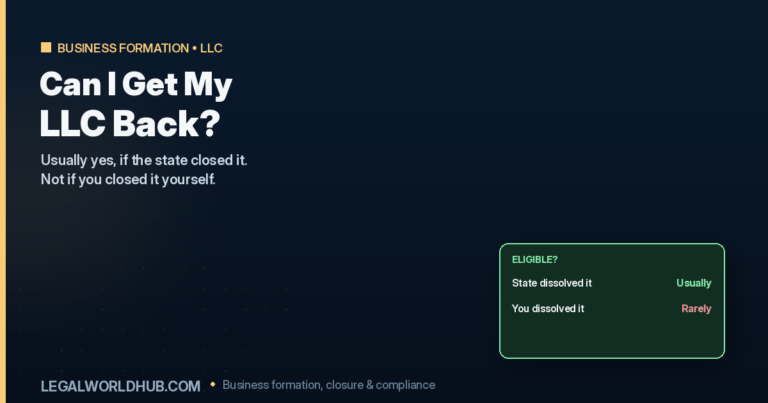
An inactive LLC in the everyday sense simply has no business activity but remains in good standing if fees and filings are current. A dissolved LLC has had its legal status formally revoked by the state, usually due to a compliance failure.
Does my LLC automatically get dissolved if I stop paying fees?
In most states, eventually yes, though the timeline varies. Some states, notably New York, do not involuntarily dissolve LLCs for non-compliance at all, meaning the entity can remain listed as active indefinitely even while ignored.
Am I personally liable for debts if my LLC falls out of good standing?
This is a real risk. Courts can potentially disregard the LLC’s separate legal status if it wasn’t properly maintained, exposing owners to personal liability for business debts, a concept known as piercing the corporate veil.
Should I let my unused LLC lapse or formally dissolve it?
Formal dissolution is usually the better choice if you don’t plan to use the business again. Letting it lapse can mean continued fee accrual in many states rather than a clean, cost-free end.
Bottom Line
An unused LLC is not maintenance-free in most states, and ignoring it rarely turns out to be the free option it seems like at first. Understand which meaning of “inactive” actually applies to your situation, know your specific state’s rules rather than assuming, and choose deliberately between maintaining, formally dissolving, or accepting the real risk of letting it lapse.
This article is general information, not legal or tax advice. LLC maintenance requirements and dissolution consequences vary significantly by state; confirm your specific situation with your state’s business filing office or a licensed attorney or accountant.