A call, a text, or a letter says you owe money on a debt you don’t remember, and whoever contacted you wants payment immediately, or else. Before you send a single dollar, know this: fake debt collection is one of the most common scams in the country, and the FTC receives tens of thousands of reports about it every year. Here is exactly how to tell whether you’re dealing with a real collector or a scammer inventing a debt that doesn’t exist.
What “Phantom Debt” Actually Is
The FTC calls this phantom debt collection: someone contacts you claiming to be a debt collector, an attorney, a process server, or even a law enforcement officer, insisting you have a delinquent debt and demanding immediate payment, often while threatening a lawsuit or arrest if you don’t comply right away. Sometimes the debt is entirely fabricated. Other times, scammers piece together fragments of real personal information, harvested from old loan applications, data breaches, or hacked accounts, to make a fake debt sound convincingly specific and real.
This isn’t a rare, fringe problem. The FTC has reported receiving more than 77,000 consumer complaints in a single year about collectors using abusive tactics or trying to collect money that genuinely wasn’t owed, and federal and state authorities have brought dozens of enforcement cases against phantom debt operations, some involving millions of dollars taken from victims before being shut down.
The Five-Point Check Before You Pay Anyone
1. Did They Provide Written Validation?
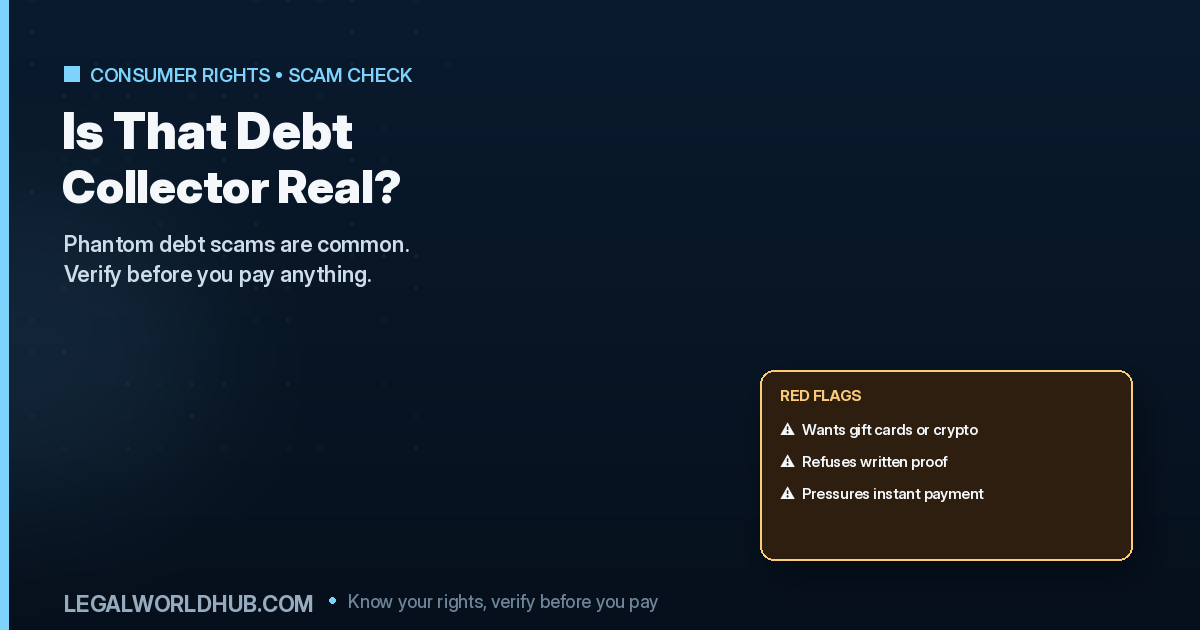
Real debt collectors are legally required to send you written validation, including the creditor’s name, the amount owed, and confirmation of their right to collect, within five days of first contacting you. If a caller refuses to send anything in writing, pushes you to pay before any documentation arrives, or gets aggressive when you ask, that is one of the clearest signs you are dealing with a scam. See our guide on your rights when a debt collector calls for exactly how to request this in writing yourself if they don’t provide it automatically.
2. Are They Demanding an Unusual Payment Method?
This is one of the single most reliable red flags across every kind of scam, not just debt collection. Legitimate collectors accept traceable, reversible-in-a-dispute payment methods: checks, standard credit or debit card payments, ACH transfers through a verified process. If someone is pushing you toward gift cards, wire transfers, cryptocurrency, or a payment app transfer to an individual rather than a business, stop immediately. Scammers favor these methods specifically because they’re difficult or impossible to reverse or trace once sent.
3. Are They Pressuring You to Act Immediately?
Real debt has generally been sitting for a while before it reaches a collector; there is essentially never a legitimate reason you must pay within the hour or face immediate arrest. Scammers rely on panic to prevent you from taking the single most effective step against them: slowing down enough to verify. If a caller escalates pressure the moment you ask a clarifying question or say you need time, take that reaction itself as information.
4. Does the Debt Match What You Actually Know You Owe?
If you don’t recognize the debt at all, that alone is not proof of a scam, legitimate debts do occasionally get correctly assigned to the right person on an account you’d forgotten about, or incorrectly assigned due to a mix-up sometimes called debt tagging, where a collector confuses you with someone with a similar name. But an unrecognized debt is exactly the situation where you should verify independently before paying anything, rather than taking the caller’s word for it.
5. Can You Independently Verify the Company Exists?
- Search the company name plus the word “complaints” or “scam” and see what surfaces
- Check whether the company is registered or licensed to collect debts in your state, through your state attorney general’s office or state licensing database
- Look them up through the Consumer Financial Protection Bureau’s complaint database
- Call the phone number listed on the official website you find independently, not a number the caller gave you, since scammers sometimes staff fake verification lines
Call the Original Creditor Directly
This is one of the most effective single steps you can take. If you believe you might actually owe the debt in question, contact the original creditor, your actual credit card company, hospital, or lender, using a phone number you find independently, never one provided by the person who contacted you. They can confirm whether the account is real, whether it was sold or assigned to a collection agency, and if so, which one. If the original creditor has no record of the debt or any assignment to the collector who contacted you, you are very likely dealing with a scam.
What a Real Collector Will Never Ask For
- Your full Social Security number, especially early in a call before anything has been verified in writing
- Bank account or routing numbers over the phone to an inbound caller you did not verify independently
- Payment via gift card, cryptocurrency, or wire transfer
- Immediate payment with the threat of same-day arrest
What to Do If You Suspect a Scam
1. Do not confirm any personal or financial information during the call itself.
2. Tell the caller you will only communicate in writing going forward, and request a validation notice by mail.
3. Independently verify, contact the original creditor and check the collector’s name against your state’s licensing records and the CFPB complaint database.
4. If you determine it’s a scam, do not pay anything, and do not provide further information even to “prove” you don’t owe the debt.
5. Report it to the FTC and your state attorney general’s office. Reports from consumers are frequently what allows authorities to identify and shut down these operations.
This Follows the Same Pattern as Other Scams
Urgency, an unusual payment method, and resistance to written verification show up constantly across very different kinds of scams, not just debt collection. See our guides on class action settlement scams and how to tell if a settlement check is real for the same underlying verification habits applied to different situations. Once you recognize the pattern, it gets considerably easier to spot regardless of what specific story a scammer is using.
Frequently Asked Questions
How do I know if a debt collector is legitimate?
Ask for written validation of the debt, verify the company independently through your state attorney general’s office or the CFPB complaint database, and confirm directly with the original creditor whether the debt and its assignment to that collector are real.
What is phantom debt?
Debt that is entirely fabricated, or debt that has already been paid, discharged, or is too old to legally collect, that a scammer nonetheless demands payment for, often while impersonating a debt collector, attorney, or law enforcement officer.
What payment methods should make me suspicious?
Gift cards, wire transfers, cryptocurrency, or payment app transfers to an individual. Legitimate collectors accept traceable, standard payment methods like checks or verified card payments.
Can a debt collector threaten me with arrest?
No. This is illegal under the Fair Debt Collection Practices Act and is one of the clearest signs you’re dealing with either an illegitimate collector or a scammer entirely unrelated to any real debt.
What should I do if I already paid a scammer?
Contact your bank or payment provider immediately to see if the transaction can be reversed or disputed, then report it to the FTC and your state attorney general’s office. Acting quickly improves your chances, though recovery isn’t guaranteed, especially with untraceable payment methods.
Bottom Line
Not every call claiming you owe money is telling the truth. Before you pay anyone, demand written validation, verify the company independently, and call the original creditor directly using a number you found yourself. If the debt turns out to be real, you still have specific rights under federal law governing how a legitimate collector can treat you. See our guide on your rights when a debt collector calls for what happens next.
This article is for general information only and is not legal advice. If you believe you have been the victim of a debt collection scam, report it to the FTC and consider consulting a consumer protection attorney.