If you have ever received a notice in the mail or an email about a lawsuit you do not remember joining, you are not alone, and you are not necessarily being scammed. Class action settlements move through a fairly standard process, and understanding the stages makes it much easier to tell a legitimate notice from a fake one, and to know what to actually expect after you file a claim.
What Is a Class Action, Exactly?
A class action is a lawsuit brought by one or a small group of people, called class representatives, on behalf of a much larger group who allegedly suffered similar harm from the same conduct. Instead of thousands of individuals each filing separate lawsuits over the same issue, one case represents everyone in the defined class.
Federal class actions are governed by Rule 23 of the Federal Rules of Civil Procedure. Before a case can proceed as a class action, a court has to certify the class, meaning it defines who is included, what claims are covered, and appoints class counsel to represent the group.
Why Do Companies Settle Instead of Going to Trial?
Most class actions never reach trial. Settling lets a company resolve the claims, avoid the cost and unpredictability of litigation, and usually do so without admitting wrongdoing. For plaintiffs and class counsel, a settlement provides certain compensation for the class without the risk of losing at trial. Settlements have to be approved by a court to ensure they are fair to the people they cover, so a company cannot simply write a check and walk away without judicial sign-off.
The Stages of a Class Action Settlement
1. Lawsuit Filed and Consolidated
A lawsuit is filed, often followed by similar suits from other plaintiffs’ firms. When multiple cases raise the same core allegations, courts frequently consolidate them into multidistrict litigation or a single case, so the parties are not fighting the same battle in dozens of courtrooms at once.
2. Settlement Negotiation
If the parties reach an agreement, they negotiate the settlement terms: the total fund, who qualifies as a class member, what benefits are offered, and how claims will be processed.
3. Preliminary Approval
The court reviews the proposed settlement and decides whether it is fair enough to move forward. Preliminary approval is not a final decision, it is permission to notify the class and begin the claims process.
4. Notice to the Class
Once preliminarily approved, the settlement administrator sends notice to class members, usually by email or postal mail, sometimes by publication when individual addresses are not on file. This notice explains the case, the settlement terms, and the options available to class members.
5. The Claims Window
Class members who want a payment generally have to file a claim by a stated deadline, unless the settlement pays automatically. During this window, class members also typically have the option to opt out of the settlement or object to its terms.
6. Final Approval Hearing
After the claims window closes, the court holds a Final Approval Hearing, sometimes called a fairness hearing, to decide whether to approve the settlement, the plan for distributing money, and the attorneys’ fees requested by class counsel. Class members who objected may be permitted to speak at this hearing.
7. Appeals, If Any
If the court grants final approval, objectors sometimes appeal that decision. An appeal is a normal part of the process, not evidence that something went wrong, but it can meaningfully delay when money actually gets distributed, sometimes by a year or more.
8. Distribution of Payments
Only after final approval, and after any appeal period has closed, does the settlement administrator begin distributing payments. This is why there is often a long gap between filing a claim and actually receiving money.
Your Options as a Class Member
- File a claim: the only way to receive a payment in most settlements
- Opt out: exclude yourself, keep your right to sue separately, but receive nothing from this settlement
- Object: stay in the class, but tell the court what you think is unfair about the deal
- Do nothing: you generally remain bound by the settlement’s terms and give up the right to sue separately, but receive no payment either
Do You Need Proof to File a Claim?
It depends on the settlement. Some offer a flat payment based on a sworn statement with no documentation required, while others require receipts or records to support a documented-loss claim, often paying more if you can support it. See our guide on settlements without proof of purchase for how that distinction actually works.
How Much Will You Actually Receive?
Most settlements distribute funds on a pro rata basis, meaning the amount available is divided among everyone who filed a valid claim, after administrative costs, attorneys’ fees and any service awards to lead plaintiffs are deducted. That means the headline dollar figure in a settlement notice is rarely what each person actually gets. Our guide on how class action payouts are calculated goes into more detail.
How Long Does the Whole Process Take?
From filing a claim to receiving payment can take anywhere from several months to several years, depending on the size of the case and whether it is appealed. Our guide on how long it takes to get paid after a class action settlement walks through typical timelines stage by stage.
Is a Settlement Notice Ever a Scam?
The underlying process is legitimate and heavily court supervised, but scammers do try to impersonate settlement administrators and even government agencies to steal money or personal information. See our guides on class action settlement scams and how to tell if a settlement check is real for how to tell the difference.
Frequently Asked Questions
What does it mean to be a class member?
It means you fall within the group of people a court has defined as affected by the conduct at issue in the lawsuit, based on factors like when you bought a product, used a service, or received a notice. See our explainer on what a settlement claim actually means for more on this terminology.
Do I have to hire a lawyer to participate?
No. Class counsel represents the class as a whole, and you do not need to hire your own attorney to file a claim. You can hire independent counsel at your own expense if you want separate representation, most commonly if you plan to object to the settlement or opt out.
What happens if I ignore a settlement notice?
If you do nothing, you generally remain part of the settlement class, receive no payment, and give up the right to sue separately over the same claims once the settlement becomes final.
Can I be part of more than one class action settlement?
Yes, as long as you genuinely qualify for each one under its own class definition. There is no limit on how many separate settlements you can be part of.
Why do settlement deadlines matter so much?
Missing the claim deadline generally means forfeiting any payment from that settlement, with no general exception for late filers. Missing the opt-out deadline means you are bound by the settlement even if you never intended to be part of it.
Bottom Line
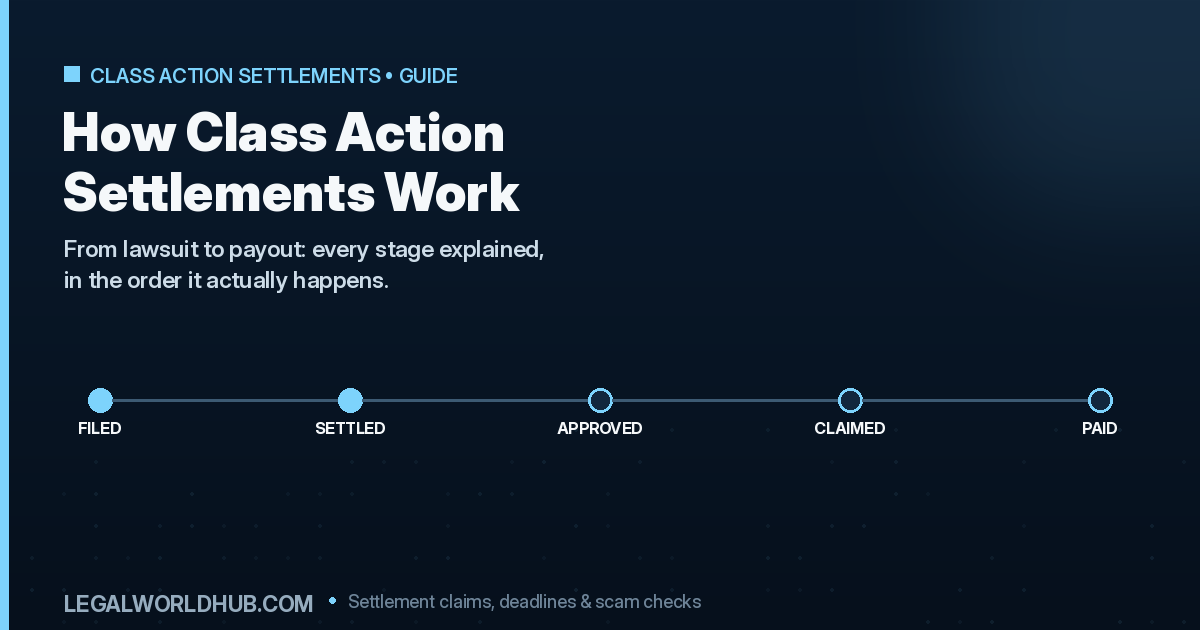
A class action settlement moves through a predictable sequence: filing, negotiation, preliminary approval, notice, a claims window, a final approval hearing, possible appeals, and finally distribution. Understanding where a particular settlement sits in that sequence tells you what to actually expect next. For current settlements accepting claims, see our open class action settlements list, and for the mechanics of actually submitting a claim, see how to claim settlement money.
This article is for general information only and is not legal advice. Individual settlement terms vary and are set by the court and the claims administrator in each case.